 Note: Part I of this post appears on the wonderful Writing About Writing Blog by Anne. R. Allen & Ruth Harris
Every author wants their novels to be made into a film or a television series. Right?
Is that where the real fame is? And is that also where the real money is, in this era of the long, slow death of reading?
Wait . . . not so fast. First of all, people are reading, and possibly even reading more now than in those ancient “normal” days before the pandemic, the shut-ins, the stay-at-home orders, the closed economy, the heartfelt protests, the torn-down statues, the racial comeuppances, and the presidential race where candidates have to (or should) campaign from home. Did I leave anything out? Americans are still reading voraciously, even if they no longer head to the local bookstore to buy their favorite hardcover editions.
Second, to be sure, people are viewing voraciously, too. Just ask Netflix, Hulu, HBO, Showtime, Starz, Peacock, Disney Plus, CBS All Access, Crackle, and any other streaming service you can name.
So let’s continue looking at how these two worlds of “series”—both the readable and the viewable kind—connect, overlap, or compete.
Most authors really don’t want their work to be thought of a source material for someone else’s creation. After all, they’ve sweated bullets over every word, every character decision, every plot point. And yet, if that dream of the big TV deal ever does come about, the author will have to surrender the quilt they so lovingly designed and sewed, then watch it be ripped apart and reassembled in what is sometimes quite a different—or even unrecognizable—way. And once their contract is signed, they’ll have very little to say about it.
There are authors who refuse to step onto that yellow brick road, even with the promise that it’ll lead to the Emerald City. Best-selling author Sue Grafton, for example, was adamant that she’d never allow her “Alphabet novels” (beginning with A is for Alibi) to be adapted for the screen, whether large or small. A quote posted on her website says, “Hollywood can’t believe writers aren’t panting for the money and the recognition—the glamor of film—but I wrote in Hollywood for 15 years and believe me, I’m cured.”
Some authors are persnickety about artistic vision to the point they will, or have, walked away from more than one TV deal. C.J. Box, best-selling author of the Joe Pickett mysteries, is an example. Producers have come after him several times, but they always wanted to superimpose their own vision on top of his. He felt these two realities would slide against each like planers gouging into good wood, so he said no. When two young producers from Sundance Productions came calling, he saw light at the end of the tunnel. But then, they lost their funding. So, for now, Pickett rides along his Wyoming ranges in our imaginations, unhampered by extraneous interpretations. I’ve had the pleasure of meeting CJ at a couple of book events. A quiet man with a wickedly rye sense of humor, he tells both the “Dudley Doright” aspects of his protagonist and the viciously dark side of his adversaries with a deft hand. And he draws a sharp line in the sand when it comes to control of his franchise.
In Part I, we took a look at works by Diana Gabaldon (the Outlander series), Craig Johnson (the Longmire series). Here, we’ll take a look at Michael Connolly (the Bosch series), and I’ll share of my experiences (the Milford-Haven series.)
I. VOICE
As I mentioned, any author who sits down to write fiction has to choose whether to write in first or in third person.
The Bosche series (https://www.michaelconnelly.com/series/ ) is told in third person for most of the books. Then suddenly, in The Lost Light and The Narrows, we’re in first person, seeing only the world that Harry Bosche sees. It makes for an interesting shift during the course of a book series, enlivening the perspective. For the television series there is no narration, but again the excellent cast, and absorbing, brooding performances by Titus Welliver as Harry, make it clear this is his story. We care when he does, and he cares a lot.
The Milford-Haven radio series (now available as an audio drama podcast {http://www.milfordhaven.com) had The Narrator as a quirky character who stitches episodes together from scene to scene, reminding us of context and setting. The fabulous performer, Freedom Barry (his real name) had a Maine twang that also tied together the Wales roots and the California branches threading through New England where the first American Milford was founded in the 1600s. The novels do not have a narrator, but are written with very strict adherence to character POV: each chapter segment begins with a character’s name, signaling we’ll see through his or her eyes for this piece. The television scripts written so far do feature the Narrator as a mysterious character who knows all, and can walk through time . . . and walls . . . as needed.
II. THE FIVE SENSES
One of the rules for the Women’s Fiction genre is that the text must touch upon each of the five senses as the story unfurls. An example I frequently site when I speak at writers’ conferences is the distinction between a restaurant scene written for Women’s Fiction versus Men’s Fiction. In men’s fiction, there is generally a sense of velocity, brevity, a getting to the point. This obviates some of the details. The man steps into the diner, looks around at the patrons, chooses a seat where his back isn’t to the front door, and orders the first menu item that jumps out at him. Now imagine that same scene for Women’s Fiction, which generally includes a more lingering sense over the delicious details. The woman walks into the restaurant and is truck by the fresh flowers on the tables, the delicate aromas wafting from the kitchen, the silky feel of the fine linen napkin, the live guitar music heard over the sound system, and finally the taste of dill on the grilled fish.
Here’s an interesting post on the subject at Writer’s Edit called How to Use All 5 Senses to Unlock your Fictional World.
There’s a different set of rules about the senses when it comes to writing narrative voice versus scripts. For obvious reasons, writing for the screen generally means writing only what can be seen or heard. After all, the technology can’t deliver anything to the other senses—at least, not yet. So the only way we get to vicariously experience smell, taste, or touch, is through a character’s experience or comment. Books that adhere to that rule are said to be written in “cinematic third person.” There’s an interesting discussion about this by Lee Bagel called Screen writing and first person
https://medium.com/applaudience/Screen writing-and-first-person-d9a21ba2302c
III. CHARACTERS
What words of wisdom might Connolly have for us about developing these characters?
1 – Dimensions. For Connelly, a key attribute for his protagonist Harry Bosche is inner turmoil. He obsesses about each and every case, is never satisfied till the case is closed, and even then, finds ways to blame himself for outcomes which often seem mixed. After all, a death has occurred in every case, an even over which closure may never be possible. This quality again makes us care about Harry, because he cares about his cases and the victims for whom he aches to find justice.
Here’s an interesting post called The Evolution of Harry Bosch on the Crime Reads blog:
The Evolution of Harry Bosch
For my Milford-Haven series, there’s a “character gauge” that measures embracing of versus resistance to progress and growth. Those who embrace their own forward momentum keep opening doors and having “aha” moments. Those who don’t keep finding their feet further entangled in the detritus of their own mistakes.
2 – Setting. Both Connelly and I have California series. Connelly set his character in the middle of the Los Angeles crimescape, meaning the inner turmoil of his character is matched note for note by the external turmoil of his city. Connelly is an avid Angelino. He knows his city well and portrays its rich textures with a kind of tender regard, despite its dirty underwear. A former crime reporter for the L.A. Times, his former newspaper wrote a piece about the 15 most iconic Bosch haunts that’s fun and interesting for his readers. And frankly, every author should know his or her setting equally well.
https://www.latimes.com/entertainment-arts/books/story/2019-10-16/michael-connelly-the-night-fire-harry-bosch-los-angeles-tour
For the Milford-Haven series, California’s Central Coast is not only the setting, it’s virtually a character. Detailed research is foundational when setting is so key to a series, so by now I can tell you which plants bloom in which months, what color the ocean is at different times of day, how many minutes it takes to drive from one coastal town to the next, what the air smells like in the evening, and how the offshore fog behaves. Many readers send me comments about this—some because they know the region well, and some because they feel they’ve visited there in person after reading my books.
3 – Caring. No one can connect to a story in which we don’t care about the characters. And one great technique for having us care, is having the character care about someone, some issue, some outcome—something. We don’t necessarily want to be hit over the head with this information. The general rule in all good writing is—Show Don’t Tell.
Harry Bosche cares about closing his cases more than he cares about anything else. This may sound cold and clinical, but instead, we see the fervency of his approach to his work as someone who refuses to let anyone—even strangers he never met—fall between the cracks.
In Milford-Haven, protagonist Miranda Jones cares about others to a fault—even to the point of putting her own needs second or third. By contrast, her manager Zelda McIntyre cares almost exclusively about herself, her upward mobility and her money. Construction boss Jack Sawyer cares about doing this his way, even if it means breaking the law. Samantha Hugo cares about rules and regulations, even if it costs time, money, and friendships. These contrasting predilections among the characters make for moments, scenes, and storylines filled with tension that propells the story forward.
A producer looking for “source material” who finds characters about whom readers and viewers can truly care tends to create the confidence needed to raise the millions of dollars needed to create a series for a visual medium.
IV. MAKING IT ONTO THE SCREEN
Though both publishing and television are fueled by popularity, these days the onus has shifted more and more to authors (creators), not only to create great stories, but to pre-prove their worth by having followers. A producer looking for material is far more likely to choose an author whose books are selling well, and who has a few thousand social media followers, than one who writes beautifully but has no “social” gravitas.
Connelly normally has a full schedule of events. https://www.michaelconnelly.com/events/ I also have a calendar that’s normally filled with bookstore events, writers’ and authors’ conferences, and special fan events. https://marapurl.com/calendar/ Though all events for all of us (and most authors everywhere) are canceled for 2020, all these authors continue to post blogs, write essays, conduct interviews, and “stay present” for their followers.
I’d be less than candid if I didn’t mention the likely time lag. In the case of all the authors focused on in these two posts—Gabaldon, Johnson, Connelly, and Purl—the move to television happened about twenty years after the books became successful. Just saying.
How do these authors feel about the television series created from their books?
Connelly expresses great appreciation for the screen team—cast, writers, production values. And Johnson has fully embraced the television series as a species he likes and understands.
I do have a couple of stories from my own annals that are worth sharing. Over the years, there have been several producers who’ve believe Milford-Haven would make an excellent television series. It began life as a drama series albeit for radio. But at the time I originally wrote the show, I was immersed in writing and performing on television, so it only made sense when I was approached.
I signed a deal with Frank, a successful, smart, sensitive producer whose work I admired. He set up meetings at several studios. We were looking forward in particular to our meeting with a well-known TV production company and they welcomed us into the comfortable offices warmly. After we’d sunk into the leather couches and accepted the proffered coffees and waters, they further impressed us by bringing forth storyboards they’d commissioned to show us how they planned to produce our show. Watercolors mounted on large posterboards were marched in by two assistants. We listened to the spiel, tuning in carefully to hear about these characters I had created, waiting to see how well they’d actually been understood.
Imagine our bedazzlement when the Director of Development said, “We see Samantha as a hedgehog.” I truly didn’t know what to say. And I got no help when I turned to look at Frank, whose mouth was hanging open. I then wondered whether we were actually in the right meeting? Did we turn left down the hall when we should have turned right?
Once assured that we were talking about Milford-Haven, I paused. “If you’d like to work with us on a new animated series, we’d be delighted to discuss the possibilities. But this is not Milford-Haven.” The meeting concluded abruptly, and Frank and I have been scratching our heads ever since.
The last meeting we “took” (as we say in L.A.) before our contract ran out had us flying to Montreal at the expense of our prospective producers, who were obviously serious enough to invest in several meetings and show us around their shooting facilities. Though we’d have to add “Canadian content,” this wouldn’t be a problem. My story is about a small, coastal town, and the eastern coastline of Quebec has the iconic settings about which I wrote.
We resonated with the director, who loved and understood my characters (not in a hedgehog kind of way); we felt the producers totally understood my themes; the budget made sense; the schedule worked for everyone. We flew home ready to okay the deal. Then, the Canadian government withdrew funding for the kind of drama we were going to produce. Our new friends were chagrined. Frank and I felt we’d given it the old college try. I turned toward the publishing opportunities that’d started to beckon. Almost everyone still asks me when Milford-Haven will be available as a TV show.
V. STRUCTURE
As I explained in Part I, every building needs a set of blueprints. Every trip needs a road map. Whatever your metaphor, structure is going to be important, whether you’re writing for a narrative voice or screenplay format.
Unlike the other authors mentioned in these posts, I began not with fictional text but with scripts. Milford-Haven USA began as a radio drama that became a hit on BBC radio. Later I responded to interest from publishers and listeners, and began to adapt the story into a series of novels. So my fiction is informed by script elements: plot points and dialogue.
Once I had my characters, premise, and a basic arc for the story, I created a Show Bible, which is common practice for soap operas. (I was performing a role on Days of Our Lives shortly after I began writing Milford-Haven. This has always proved to be a tremendously valuable tool for me. Each episode was broken down into six scenes; each had to advance the story for at least six of the major characters. I still use a more in-depth version of this as a technique for tracking the braided storylines of my series of novels and novellas. Here are two great resources I found about how to write a TV show bible:
TV Show Bible Template
https://nofilmschool.com/how-write-tv-show-bible-free-template
TV Show Bible Examples
40 TV Show Bible Examples to Download and Study
An abundance of advice is available for how to structure a novel, which I included in Part I.
Structure for scripts is far more strict than it is for novels, and I detailed some good resources in Part I.
How does the structure compare from books to screen among the authors we’re considering?
Bosch
The Bosch books are masterfully gritty, poignant, and haunting. We’re drawn in by excellent writing and a character who evokes both admiration for his talent, and compassion for his inability to create the happiness that seems to shimmer all around him in the City of Angels. The television series is excellent, and brings all these qualities to the screen. But to do so, it sacrifices key elements of the original timeline.
As Connelly explains, Season 1 took storylines and events from the first three books in the series. As the television series played out, certain key plot points were retained, but out of order. For example, in the book series, Harry doesn’t have a child in the first several books; in the television series, not only does he have a child, she’s a young woman by the time we’re meeting her. This threw into disarray the relationship with the protagonist’s wife/ ex-wife/ dead wife, making it quite confusing to try tracking the two media concurrently.
You can read an interesting interview with Connelly on the subject here:
FAQs
Milford-Haven
This adaptation went in reverse. The story appeared first as scripts, and was later adapted into novels. Again, there are a few significant plot changes. For example, Sally O’Mally isn’t able to keep her child in the radio series, but in the novels, she is. That’s a big shift in the arc of a character. But to serve the needs of readers, who expect much more depth and detail in narrative than what can be fit into a 30-minute weekly episode, this choice makes sense. Though the child’s father exits the relationship in both media, in the novels, a man from the past—the lost man of her heart—reappears and joyfully accepts a parenting role.
Generally I find that in the adaptation process of going from script to novels, the issues are more deeply explored, the dialogue has more context, and the sub-text, rather than being left to the interpretation of my marvelous original cast, is now left to me to bring to the surface. https://marapurl.com/books/
Every author I speak to—and this goes for me, too—will tell you that our characters surprise us. “What do you mean?” I’m often asked at events attended by readers. “I mean, you’re making it all up, aren’t you?” The answer to that question is Yes . . . and No. We authors dig deep to find the truths lurking in the souls of our characters. When these truths surface, we have little choice but to write them down, if we want to be authentic. And remember, the root of the word “author” is the same as the root of the word “authentic.”


 A Guest Post by Mara Purl
 It was a day off from teaching on the Publishing at Sea Cruise, and my husband and I were looking forward to our first visit to St. Maarten—Sint Maarten, as the Dutch side of this Caribbean island is called. Rain visited the island that day, the only time the skies were clouded during our voyage. So, clad in our rain jackets, we disembarked and walked into a charming village that looked like a European enclave rain-slicked for the tourists.
 “Strings attached” usually has a negative connotation. The good news is, yes, you’re receiving a gift. The bad news is, no, it’s not exactly free, because it comes with “strings”, or conditions. You can borrow the car is you don’t drive over 55 miles per hour; you can stay rent free if you do all the yard work; you get the idea.
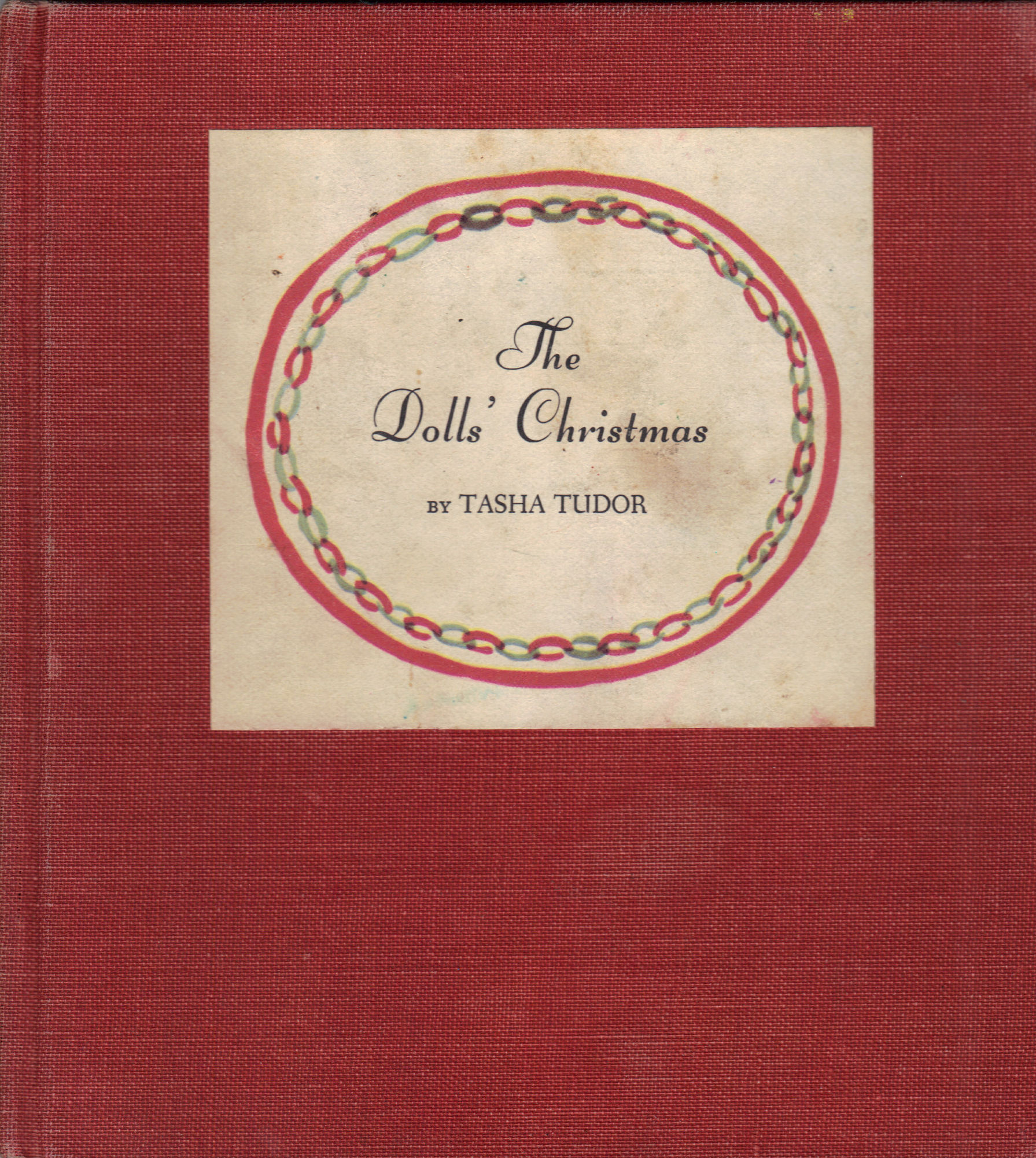 The house is decorated, the tree sparkles in the living room, the dining table is set festively for upcoming gatherings, and the playlist is poised. Balsam scents the rooms and angels preside from their perches. But this year we have special visitors who seem to have taken over the den and the guest room. I wouldn’t be surprised if they’ve been tiptoeing around while I’m not looking, arraying themselves throughout the house. This just might be the dolls’ Christmas.
 In Japan, where I grew up, tea boxes are used for storage. Though you may be imagining small, decorated containers—which do exist in abundance there—these boxes are generally two feet long, a foot high, made of sturdy wood, and lined with tin. The metal lining keeps the contents moisture free, making it ideal for storage
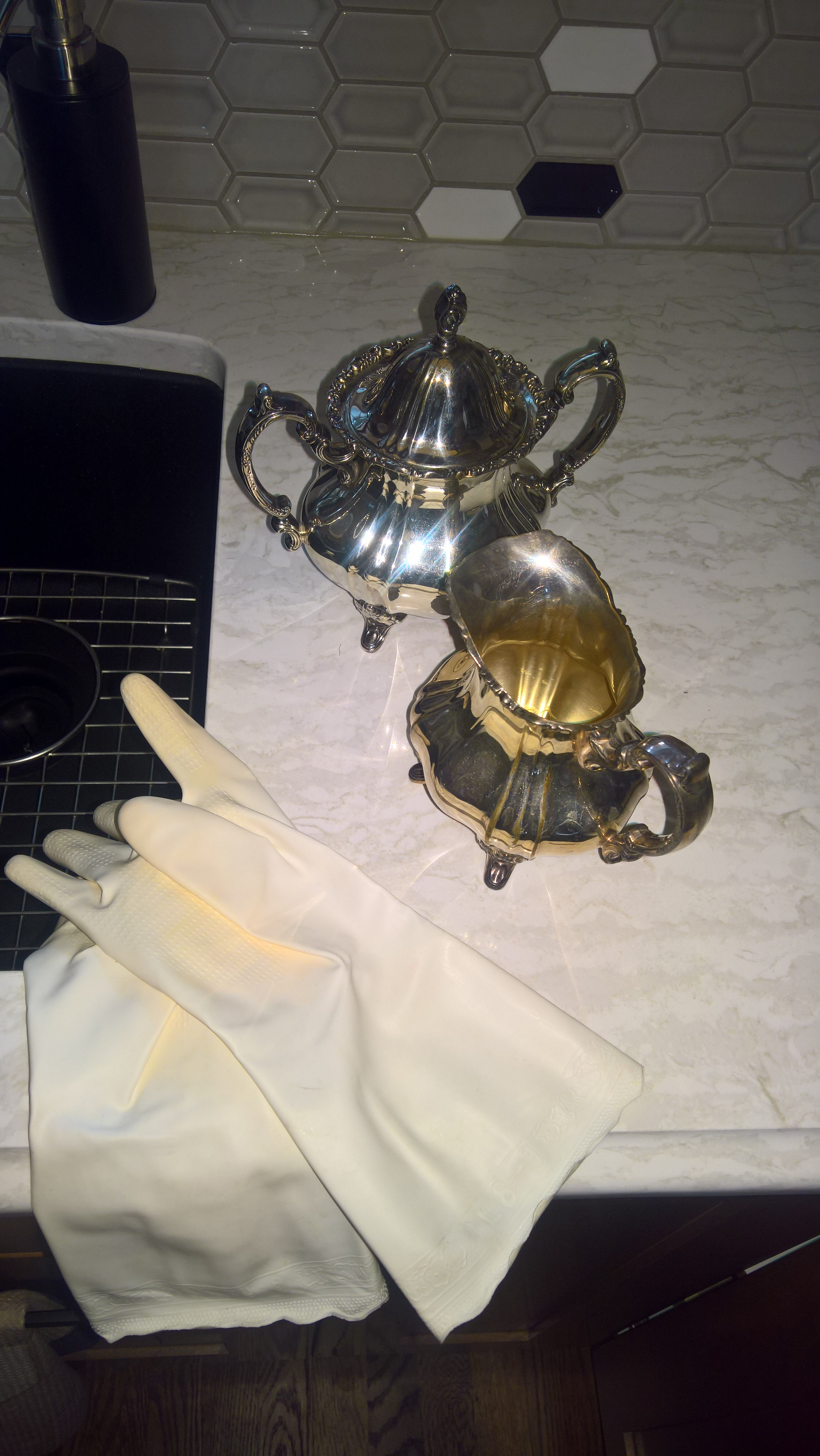 It’s that time again, when certain things need to be cleaned in preparation for upcoming gatherings. These “things” have special significance as beautiful objects. But for me, they’re really metaphors. What is it, exactly, that needs to be polished?
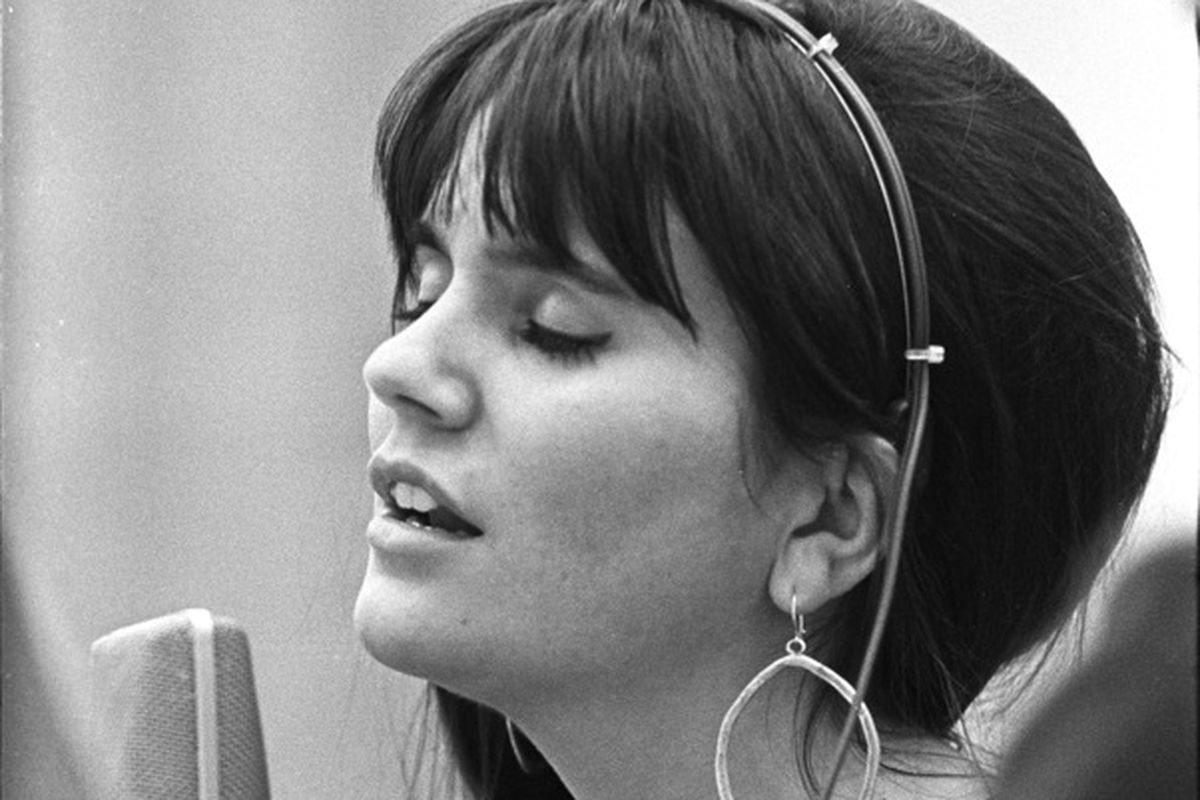 Many events from the last few decades seem to have their own musical themes, as though life itself were a film with an accompanying score. Specific personal memories seem to embed themselves into whatever the prevailing musical tracks that were playing at the time. Maybe at age 12, you held hands with your first boyfriend and “I Want To Hold Your Hand” was playing on the radio that day. Or maybe you suddenly understood that your destiny was to become a runway model and Prince’s “You’ve Got the Look” was hitting the charts at the time.

 The Milford-Haven Novels